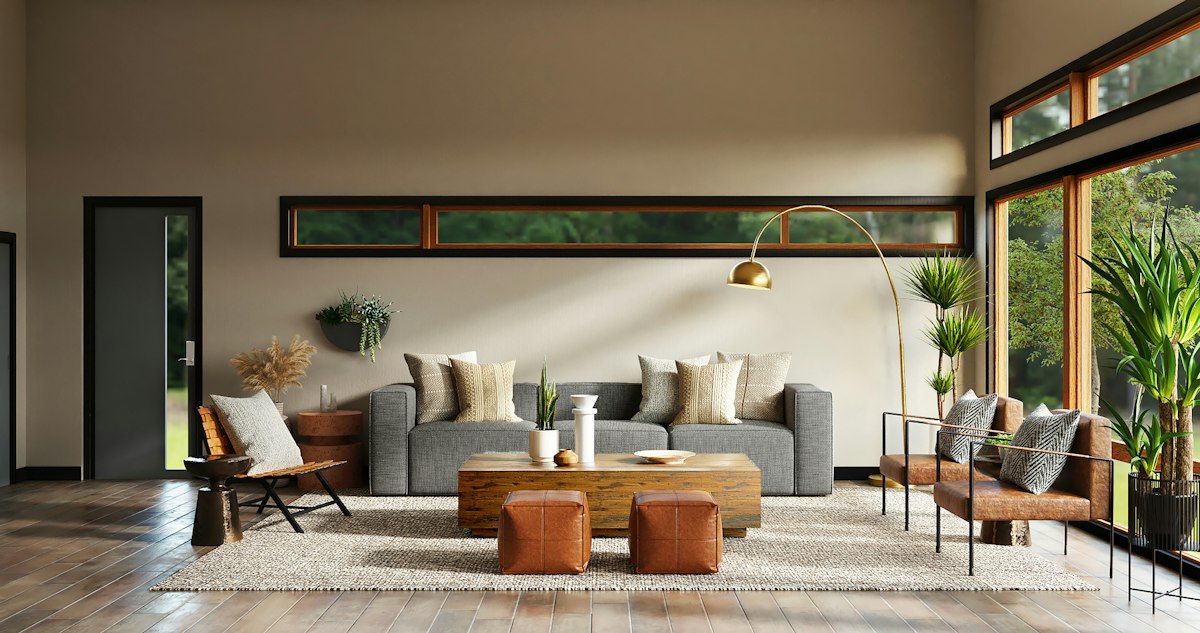
To create a Japandi-inspired room with existing furniture, simplify the layout, use a small coordinated palette, and prioritize comfortable materials and useful lighting. Keep meaningful objects and avoid replacing serviceable pieces just to match a trend. Treat Japanese and Scandinavian references with specificity rather than as interchangeable decorative props.
Japandi is commonly used to describe interiors that combine Japanese and Scandinavian design influences. The label can be useful for finding a mood—restrained, warm, and practical—but it should not become a shopping list or a claim to represent either culture completely. You can explore the approach with the furniture you already have.
Begin with space between things
Remove the pieces that interrupt movement or repeat a function. A room feels calmer when the route through it is clear and important objects have some breathing room. This is an editing exercise, not a requirement to empty the house.
Keep items that are useful or meaningful even if they do not fit a trend photograph. A familiar chair can work in a quieter arrangement with different surroundings. Try the layout before deciding it needs replacement.
Use a limited palette with enough contrast
Start with the existing floor and largest furniture piece. Add a small number of supporting colors: perhaps a pale wall, warm wood, and a darker accent. Avoid choosing every finish in the same light beige, which can leave the room without definition.
Test samples together in the room. A black frame or darker ceramic piece can create a focal point without requiring a dramatic feature wall. Use contrast where you want attention, then let other surfaces remain simpler.
Let comfort guide the materials
Soft textiles and practical lighting keep restraint from becoming severity. Sit in a chair before buying it when possible, check table heights against the seating, and choose fabrics you can maintain. A low-profile piece is not a good fit if getting in and out of it is uncomfortable.
Choose natural materials for the way they perform and age, not because a label requires them. A well-made existing item can remain part of the room even when it uses a different material.
Make the display personal
Choose a few objects you enjoy seeing: pottery, a print, a branch in a vase, or books that belong to your life. Avoid using religious or cultural objects merely as anonymous props. Learn what an object is and credit its maker where appropriate.
Live with the edited room before adding another layer. If it feels too bare, add usefulness first—a reading light, a place for a cup, or a textile that makes the seat more comfortable. A room succeeds when its restraint supports daily life rather than making the household afraid to disturb it.
Start with an inventory instead of a shopping list
Photograph the room from its main entry and from the places where you sit. Mark the pieces that make daily life easier and those that repeatedly get in the way. A side table used every evening has a clear function, even if it is not the shape shown in a trend article. A decorative stool that blocks a drawer may be a better candidate for removal.
Sort accessories into meaningful objects, useful objects, and things you no longer enjoy. Keep the first two groups where they can be appreciated or used. This is not a rule about owning a particular number of possessions. It is a way to give the room a clear structure while retaining the household’s character.
Try moving one piece before replacing it. A familiar chair can look very different beside a quieter wall and a practical reading lamp. An existing cabinet may fit the new direction once its top is cleared. Reusing what works also lets you reserve spending for a real gap, such as uncomfortable seating or inadequate light.
Coordinate existing wood tones
Different wood tones do not automatically clash. Compare their warmth, darkness, and the amount of space each occupies. A large dark floor and a light wood table may create useful contrast, while several nearly matching finishes can appear accidental. Repeat one tone in another small element if the room needs a clearer connection.
Use actual samples when adding a piece. A product photograph may not accurately show the finish beside your floor or in your evening light. If a sample is unavailable, review the seller’s description and return terms carefully. Do not assume a name such as natural oak describes an identical appearance across manufacturers.
A hypothetical U.S. living room might retain a comfortable gray sofa, pair it with an existing wood cabinet, and use a cream textile plus one darker accent to connect the pieces. The arrangement can feel restrained without requiring a matching furniture collection. The principle is coordination around what is present, not a prescribed set of materials.
Make quiet spaces work for a busy household
A restrained room still needs storage for remote controls, chargers, toys, and work materials. Assign those items a practical location near where they are used. Closed storage can reduce visual clutter, but it should not be so inconvenient that everything ends up on the coffee table by evening.
Choose textiles for the household’s cleaning routine and the way the furniture is used. Check whether covers can be removed and follow the exact care instructions. A pale, delicate fabric may be inappropriate for one family and entirely workable for another. A visual style should not require more upkeep than the household wants to provide.
Lighting should support activities rather than create a uniformly dim atmosphere. A reading chair needs useful light, while a dining area may need a different arrangement. Keep the room easy to move through after dark. Simplicity is successful when it makes ordinary tasks feel less complicated.
Frequently asked questions about Japandi style
### Do I need low furniture? No. Choose seating and tables that are comfortable for the people using them. Low profiles can be part of a visual reference, but they are not mandatory. If getting up from a chair is inconvenient, its appearance does not make it the right choice for your home.
Can I keep colorful art?
Yes. A limited surrounding palette can give a meaningful artwork more presence. Consider how its colors relate to nearby textiles or objects, and avoid crowding it with competing displays. Personal art does not need to be replaced by anonymous neutral prints to make a room feel calm.
Is Japandi an exact historical style?
The term is commonly used as a contemporary design label bringing together Japanese and Scandinavian influences. It should not be treated as a complete account of either culture. When discussing a particular object, technique, or maker, use the specific name and context rather than assuming the broad label explains it.
Finish with a comfort review
Sit in each main location and check the light, reach to a table, and route through the room. Notice whether the edited arrangement has made cleanup easier or simply hidden clutter somewhere less convenient. Add only what resolves a real problem or contributes personal meaning. A Japandi-inspired interior can feel settled and warm while remaining recognizably your own home.