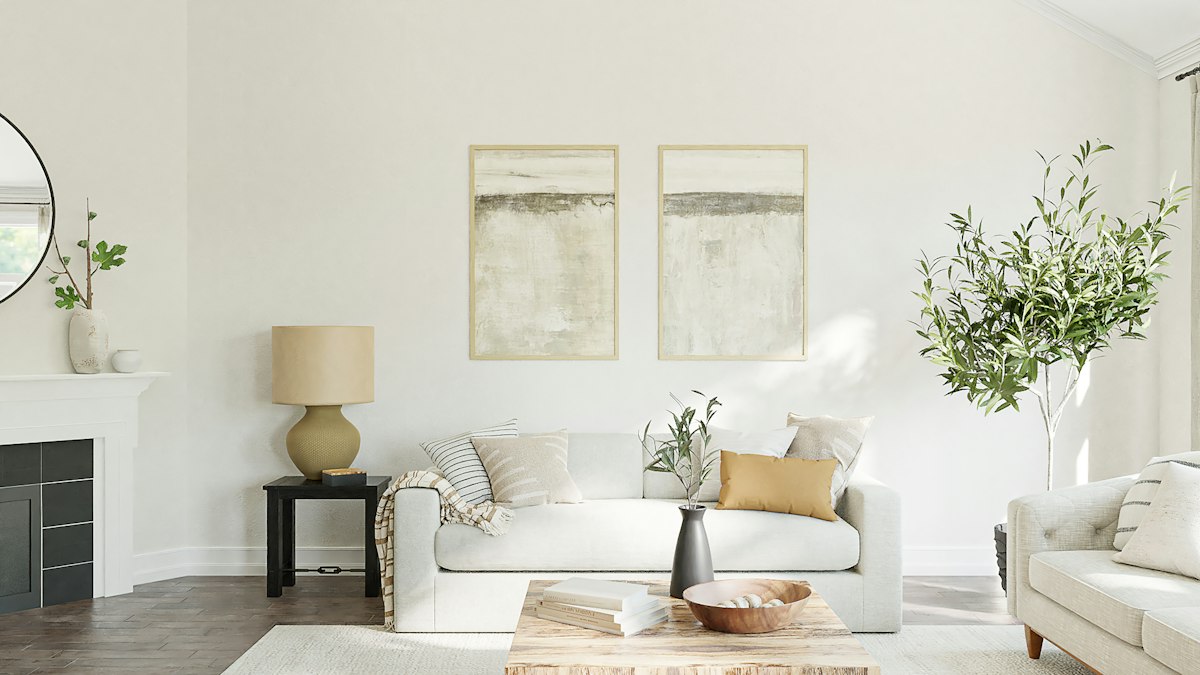
A warm neutral living room combines compatible undertones, varied textures, useful lighting, and enough light-dark contrast to define the furniture. Begin with the sofa, rug, or floor you already own. Arrange seating for everyday use before adding decorative accessories.
A neutral living room can feel peaceful or strangely unfinished. The difference often comes from contrast: light against dark, smooth against textured, and open space beside a few substantial pieces. You do not need a room full of beige furniture. You need a palette with enough variation to make the pieces belong together.
Choose a starting point you already own
Use the sofa, rug, or flooring as an anchor. If the floor has a reddish cast, hold fabric and paint samples beside it before committing to cool gray upholstery. Neutrals have undertones, and those undertones become more noticeable when large surfaces sit together.
Choose two or three supporting colors rather than matching every item exactly. A cream sofa might work with oatmeal curtains, medium-brown wood, and a dark frame. Repeat a darker note in a few places so the room has definition instead of fading into one pale surface.
Vary texture where you touch it
A woven pillow, a soft throw, and a smooth side table create variety without introducing another color. Use texture selectively; every surface does not need to compete. Check fabrics in person when possible and consider how they will be cleaned in your household.
For a family room, a fabric you can maintain confidently may be a better choice than a delicate material chosen only for its appearance. Look at care instructions and removable-cover details before buying. “Performance” is a product claim to investigate, not a guarantee that every stain will disappear.
Arrange the room around company
Pull seating into a usable conversation group when the floor plan allows. Make sure a person can set down a drink without reaching across someone else. Test the arrangement with the room’s actual traffic: the door to the kitchen, a hallway opening, and the route to a balcony all matter.
If the room is narrow, try fewer substantial pieces before adding several tiny ones. A collection of small tables can consume more circulation space than one well-placed table.
Finish with light and personal objects
Use light where people sit, read, and move. A lamp beside a chair can make that corner feel intentional even when the ceiling fixture is off. Balance any low mood lighting with enough visibility for comfortable movement.
Leave room for objects that belong to your life: a framed print, books you read, or a bowl brought home from a trip. Group a few pieces and let the surrounding surface remain clear. Warmth comes partly from material and color, but it also comes from a room that looks ready to be lived in.
Build a neutral palette in three roles
Give the palette a background, an anchor, and an accent. The background might be a pale wall and simple curtains. The anchor could be the sofa or a substantial wood table. A darker frame, lamp, or textile can provide the accent. These roles help you avoid buying several pale objects that individually look pleasant but together lack definition.
Use the largest existing surface as a reference. If the floor is warm and reddish, compare upholstery samples directly beside it. If the sofa has a cool gray cast, test whether a proposed cream looks harmonious or unexpectedly yellow. Neutral is a broad description, not a guarantee that two materials will coordinate.
For a hypothetical family living room, a medium-toned sofa, a softly patterned rug, and wood furniture could provide the main structure. Lighter curtains keep the window area quiet, while a darker lamp repeats a note from the rug. The exact colors depend on the room. The useful lesson is to repeat relationships rather than require every object to match.
Choose textiles around the way the room is used
Before selecting pale upholstery, consider pets, children, snacks, and how frequently you want to clean. Read the exact care instructions and ask whether cushion covers can be removed, replaced, or cleaned separately. A textile may look soft online but feel too rough against bare skin, so request a sample when practical.
A rug can define the conversation area, but its dimensions should relate to the furniture arrangement. Mark the proposed size on the floor and check how it meets doorways and nearby furniture. Avoid choosing a smaller rug solely because it costs less if the result leaves the seating group visually disconnected. Compare the whole arrangement before deciding.
Add texture at different scales. A larger woven surface can sit beside smoother upholstery and one finer textile. You do not need a different texture on every cushion. Leave quieter areas so the tactile pieces can register. This keeps a neutral room varied without making it visually busy.
Use lighting to support separate activities
List the activities that happen in the room after dark: reading, talking, watching television, or walking through to another space. Each may need a different lighting position. A table lamp can support a chair while another source provides general visibility. Check glare from the sofa and reflections on screens before choosing the final lamp location.
If you are replacing bulbs, compare their specifications and compatibility with the existing fixtures and controls. Test a small number before changing the entire room. The same wall color can feel different under different lamps, so review your paint and fabric samples under the lighting you intend to keep.
Avoid making the room depend on a single dramatic fixture. A decorative ceiling light can be attractive while leaving reading locations inconvenient. Place useful light first and treat the statement piece as part of the arrangement, rather than its only source of comfort.
Frequently asked questions about neutral living rooms
### How do I stop a beige room from looking flat? Introduce variation in value and texture. A medium wood tone, a darker frame, or a softly patterned textile can provide definition without adding a bright color. Start with one change and inspect the whole room before buying several new accessories.
Can gray furniture work in a warm living room?
Yes, if the surrounding colors and materials work with its undertone. Try samples beside the actual upholstery. Wood, textiles, and lighting can contribute warmth, but a particular cream or beige is not automatically compatible with every gray.
Does a neutral room need matching furniture?
No. A repeated wood tone, a similar shape, or a consistent color relationship can connect different pieces. Matching sets are one option, but existing furniture often works well after the layout is improved and unnecessary pieces are removed.
Finish the room with a use test
Sit in each main seat and check what is within reach. Is there a place for a drink, enough light for the usual activity, and a clear route out of the room? Remove an accessory if it makes those tasks harder. A neutral living room feels warm when its visual restraint is matched by practical comfort and personal objects that belong to the household.