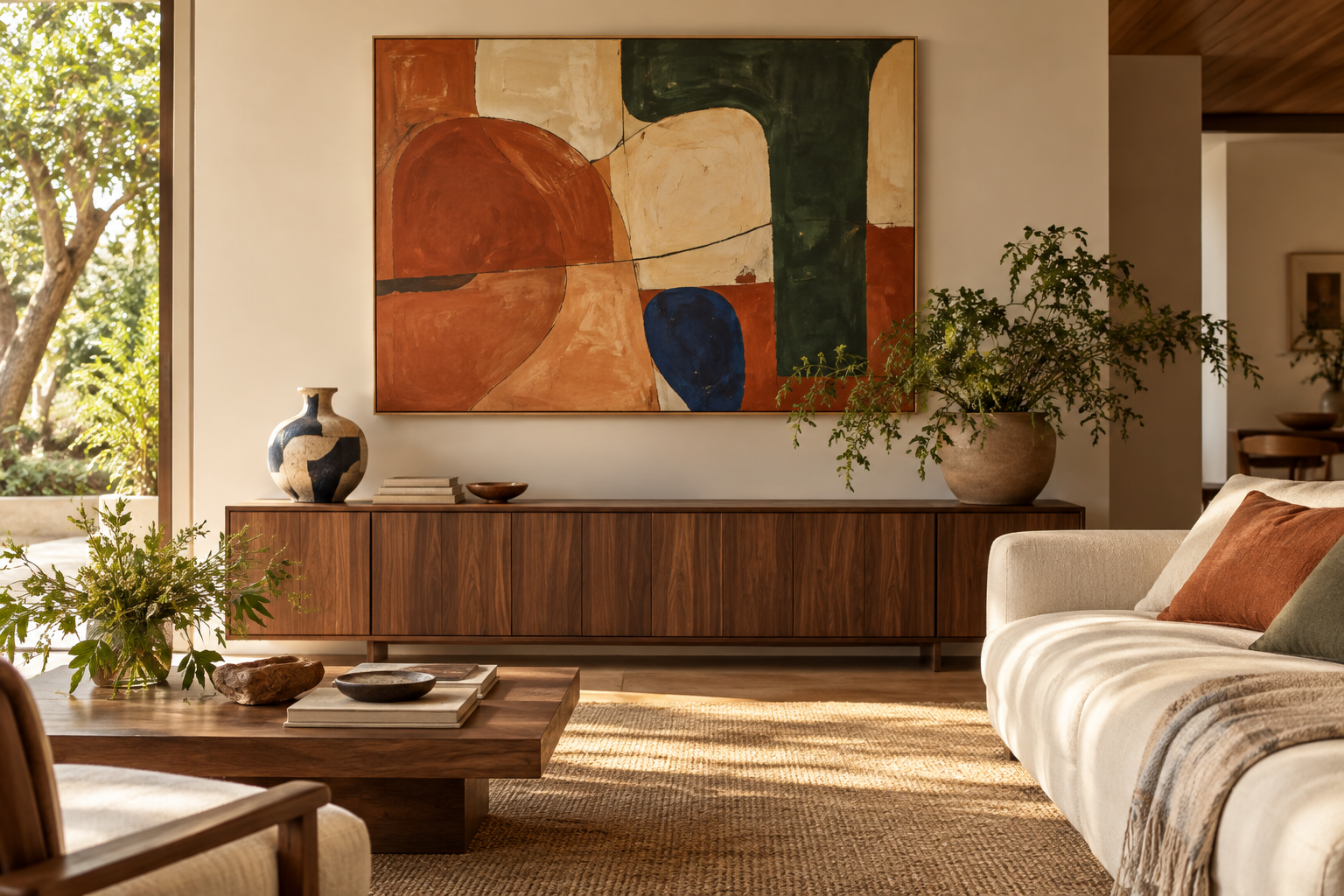
Bring Brazilian art into your home by choosing work you connect with, identifying the artist and type of object accurately, and planning appropriate display and care. Compare scale in the room without requiring the art to match every finish. For U.S. purchases or imports, clarify delivery, documentation, and complete costs before committing.
Art can give a room a point of view that matching furniture never will. If Brazilian art interests you, begin with the artists and the work rather than looking for a generic “tropical” image. Brazil’s artistic expression is diverse; a thoughtful collection leaves room for that variety and for your own response.
Follow your interest before choosing a wall color
Save works that hold your attention and note why: composition, subject, texture, or use of color. Learn how the artist describes the work and where it sits within their practice. A gallery biography or an artist’s own website is a better starting point than an anonymous marketplace caption.
You do not need to buy the most recognizable name. An emerging artist, a small work on paper, or a properly licensed print can be a meaningful choice. Decide what you can comfortably spend before browsing so the purchase remains considered.
Know what is being offered
Ask whether the item is an original, an editioned print, an open-edition reproduction, or another format. Request the artist’s name, title, medium, dimensions, and the seller’s documentation. For a limited edition, clarify the edition details and what accompanies the work.
Check shipping, condition information, return terms, and framing needs. Avoid treating an artwork as a promised investment. The decision here is about living with a piece you value, not forecasting resale returns.
Test scale without making art match everything
Tape a paper outline to the intended wall. View it from the entrance and from the main seat in the room. The relationship to a sofa, console, or nearby doorway can matter more than the size of the wall alone.
A piece can introduce a new color rather than repeat every shade already present. Let nearby accessories stay quieter if the work is visually strong. Give it enough space that another object does not compete for attention at the same spot.
Ask about display and care
Discuss framing and environmental needs with the artist, seller, or a qualified framer. Works on paper, photographs, and mixed-media pieces can have different requirements. Avoid placing a work in direct sun or a damp location without understanding its sensitivity.
Keep the invoice and artwork information together. If you later share the work online, identify the artist accurately and check permissions for reproducing the image. A considered display respects both the room and the person who made the work.
Begin with a subject or maker that interests you
Art selection becomes more rewarding when it begins with curiosity rather than an empty wall. You might respond to a particular image, technique, place, or artist’s approach. Read the artist’s own statement or information supplied by a reputable gallery, and keep the specific attribution with the work.
Brazilian art includes many regions, traditions, and contemporary practices. Avoid treating origin as a single visual style. A colorful print, a photograph, and a sculptural object may have very different contexts even when all come from Brazil. Let each work be described on its own terms instead of forcing it to represent an entire country.
For an American home, the connection may be personal travel, family history, or a developing interest in a maker. None requires the rest of the room to become a themed setting. A meaningful work can coexist with everyday furniture and a restrained palette without decorative props added to explain it.
Understand exactly what you are purchasing
Ask whether the item is an original, a print, an editioned work, or another type of reproduction. Request dimensions, materials, condition information, and the maker’s attribution. If an edition is involved, ask what documentation accompanies the purchase. Keep the seller’s description and receipt together for future reference.
A low price is not proof of a problem, and a high price is not proof of authenticity. Evaluate the actual information supplied rather than relying on a confident story. If attribution or provenance is a major part of the price, seek appropriate independent expertise before treating the claim as established.
For a cross-border purchase, ask the seller or a qualified shipping provider to explain packaging, transit, insurance, and the responsibilities associated with delivery. Confirm any applicable import questions with current professional or official guidance for the specific item. Do not assume the price displayed online is the complete amount needed to receive and install it in the United States.
Test the scale before framing or hanging
Mark the proposed overall dimensions with paper where it is safe to do so, including the frame if one is planned. Look from the usual seating position and from the doorway. A work does not have to fill an entire wall, but it should have an intentional relationship to the furniture and nearby objects.
Consider whether a grouping or a single work better supports the room. If you combine pieces, leave enough visual separation for each to be appreciated. Avoid choosing a frame solely because it matches a cabinet; the work’s materials and conservation needs may be more important than repeating a finish.
Ask the artist, gallery, or a qualified framer about display and care. Light, moisture, handling, and mounting requirements can differ by medium. The room should accommodate the work rather than expose it to unsuitable conditions simply because a particular wall is available.
Frequently asked questions about displaying Brazilian art
### Does the art need to match my sofa? No. Look for a relationship that feels comfortable, which may involve contrast rather than matching. A repeated color in a small textile can connect the room if needed, but the artwork should not be reduced to a paint swatch.
Can a print be a thoughtful first purchase?
Yes. What matters is understanding what it is, who made it, and why you want to live with it. Keep the description accurate and choose framing and display appropriate to the work. An original is not the only valid way to begin collecting.
Should I mix art from different places?
You can. Personal meaning, scale, and a considered arrangement can connect different works. Preserve each maker’s identity and avoid presenting unrelated objects as examples of one cultural tradition.
Let the collection develop gradually
Live with a first piece before filling every remaining wall. Notice where you enjoy seeing it and whether the arrangement gives it enough attention. Keep a simple record of the maker, purchase information, and care advice. A thoughtful collection grows through informed choices and sustained interest, with the room offering a setting rather than dictating the art’s identity.