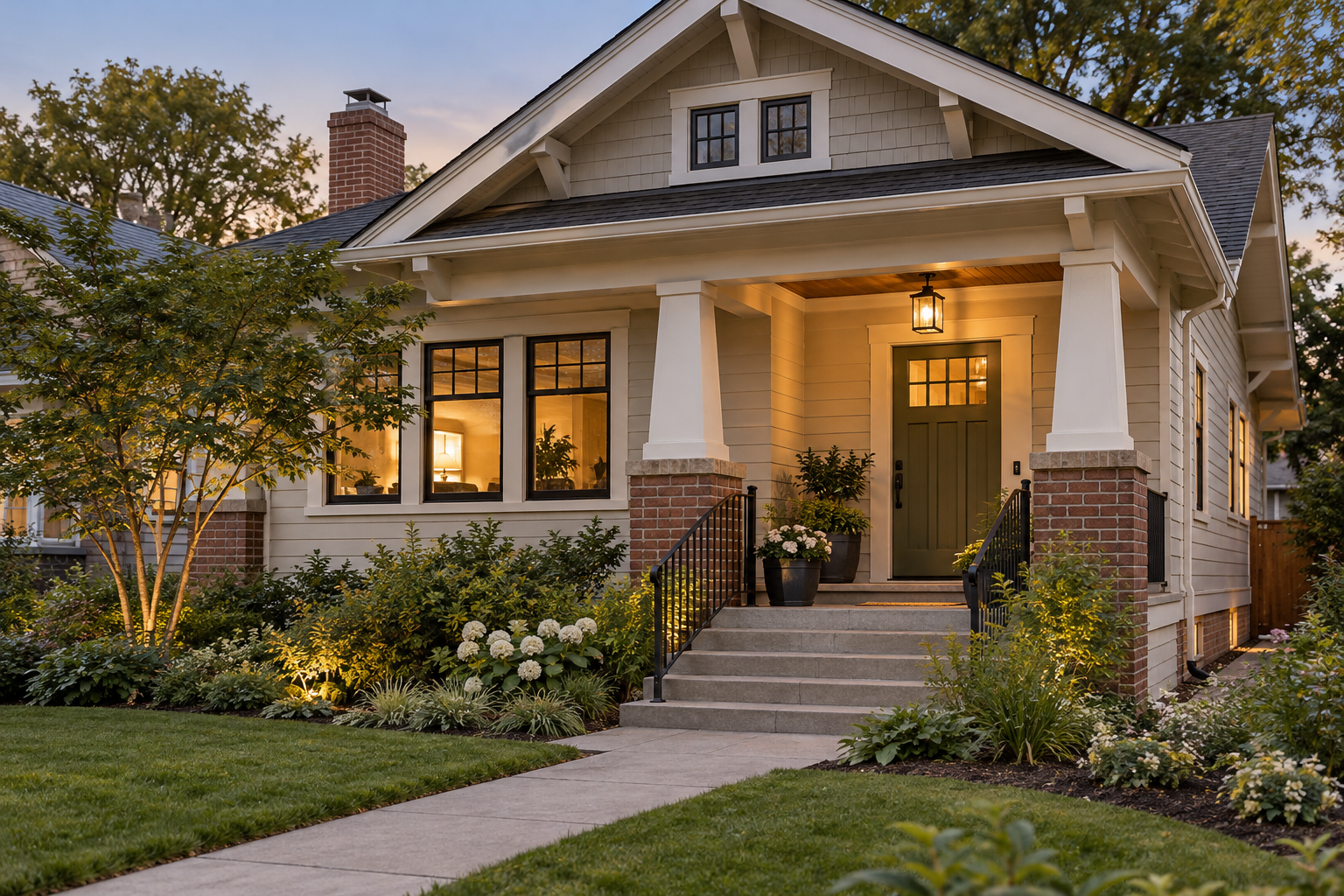
Improve curb appeal by addressing maintenance, clarifying the entrance, and coordinating paint, planting, and visible hardware with the home you have. Start with fixed materials such as brick, roofing, and paving. Test small changes before committing to a complete exterior makeover.
The most convincing exterior refresh usually begins with what the house already does well. A porch, a roofline, an older brick facade, or a simple entry can provide the direction. Before adding a fashionable material, separate maintenance needs from cosmetic changes and look at the whole approach from the street.
Fix the distracting problems first
Note peeling finishes, damaged trim, poor drainage, and fixtures that no longer work. Have signs of water damage or structural deterioration assessed before covering them. Fresh paint can change an appearance, but it does not repair the cause of a recurring problem.
Clean and maintain surfaces using methods suitable for the material. If the house is older or the finish history is uncertain, ask an appropriate professional about preparation rather than assuming aggressive removal is harmless.
Choose a restrained color relationship
Use the roof, masonry, and other fixed materials as the starting point. Select a main color, a supporting trim color, and an optional entry accent. Test exterior samples outside at different times of day; strong sunlight can change how a color reads.
Avoid choosing every element independently. A door, garage door, shutters, and trim all share the same view. Decide which one should draw attention and let the others support it.
Make the entrance understandable
Stand where a visitor arrives. Is the route to the door obvious? Are house numbers visible? Does planting obscure the entry or crowd the path? Sometimes pruning, a better-placed number, and a working light provide a larger improvement than an elaborate decorative feature.
Choose exterior fixtures rated for their intended exposure and use qualified help for electrical changes. Direct light where it supports arrival and movement, rather than using brightness alone as the goal.
Coordinate planting and hardscape
Use mature plant dimensions when planning beds near the house. Keep service access and drainage in mind, and select species for your local growing conditions. Repeating a few plants can create a more coherent approach than a collection of unrelated accents.
Check any applicable association or historic-district requirements before changing visible materials or colors. For your first phase, choose one complete area—such as the entry—rather than making scattered changes across the facade. A finished, well-maintained entrance gives the house a clear point of welcome while leaving room for later improvements.
Read the house from the street and the front door
Look at the property from the usual approach, then walk toward the entrance as a visitor would. These views reveal different problems. From the street, the roof and overall planting may dominate. At the door, lighting, address visibility, hardware, and the condition of the path may matter more.
Take photographs before shopping. Identify the elements that feel distracting because they need maintenance and those that simply do not relate to the rest of the exterior. A damaged gutter or worn threshold should not be treated as a color problem. Separate repairs from optional styling so necessary work receives priority.
Consider the house’s existing character. A modest porch, older brick, or a particular roofline can provide the basis for a coherent refresh. Copying a very different architectural style may require changes that do not suit the building. A restrained improvement often begins by making the original features easier to appreciate.
Build the color palette around fixed finishes
Roofing, masonry, and paving usually occupy more visual area than a painted door. Compare proposed colors beside those materials in outdoor light. A sample that looks warm indoors may read differently against brick or in full sun. Review the combination at different times before ordering a complete exterior paint package.
Assign each color a role: main surface, trim, or accent. Avoid making every small feature a competing focal point. A door can stand out without requiring the garage door, shutters, and every planter to demand equal attention. The useful relationship depends on the home’s proportions and existing materials.
For an illustrative U.S. suburban home, a coordinated entry light, a freshly maintained door, and a simplified planting bed could improve the approach without replacing the siding. The example shows a sequence of attention, not a guaranteed increase in property value or a universal color formula.
Keep planting compatible with access and upkeep
Choose plants for local conditions and mature size, not their nursery-pot appearance. Ask regional experts about species appropriate to your exposure and soil. Leave room for doors, paths, utility access, and maintenance. A bed that looks full on the first day may become inconvenient if every plant outgrows the available space.
Observe how the entrance works after rain and after dark. If drainage or uneven surfaces create problems, get appropriate advice before covering them with decorative material. A welcoming approach should be easy to understand and maintain as well as attractive from a distance.
Think about repeated seasonal tasks. Where will leaves collect, how will planting be watered, and what will remain visually coherent when seasonal flowers are gone? A small number of suitable plants and a manageable care routine can provide a stronger result than a complicated display that quickly becomes difficult to maintain.
Frequently asked questions about curb appeal
### What is the best first upgrade? Start with the most visible maintenance or usability problem. That may be cleaning an existing surface, repairing a damaged feature, or making the entry easier to identify. Decorative purchases are more effective once the approach is in good working order.
Should I replace the front door?
Only after deciding what is wrong with the current one. Appearance, operation, condition, and project goals lead to different solutions. Some doors may benefit from suitable maintenance or refinishing; others need professional assessment or replacement. Do not decide solely from a trend photograph.
Does curb appeal always increase resale value?
There is no universal financial result. Local market conditions, the property, and the scope of work matter. Choose improvements that address the home’s real needs, and seek current local advice for decisions driven primarily by resale expectations.
Use one focused before-and-after comparison
Finish the first set of changes, then photograph the house from the same locations as before. Check whether the entrance is clearer and the materials feel more connected. If the result already works, avoid adding details merely to fill a shopping list. Curb appeal improves when the house presents a coherent, cared-for arrival rather than a collection of unrelated upgrades.