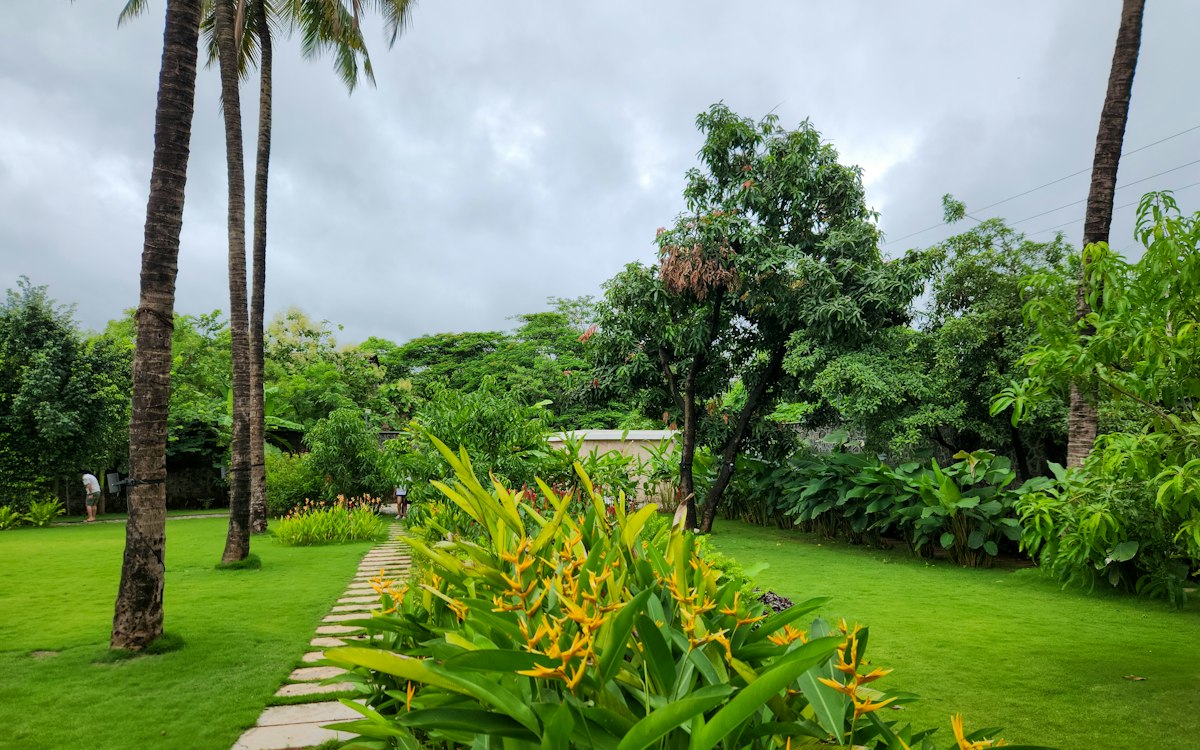
A tropical-looking U.S. garden starts with climate-appropriate plants, layered foliage, and a manageable watering plan. Check winter hardiness, sunlight, drainage, and mature plant size before purchasing. In colder regions, use suitable hardy plants as the permanent structure and reserve tender tropical plants for seasonal containers.
Big leaves, layered greenery, and a shaded place to sit can give a yard a tropical feel. The planting plan, however, needs to belong to the place where you live. A garden that stays outside year-round in South Florida may need a very different approach in Michigan. Borrow the lush composition; build it with plants that suit your site.
Find the limits of your growing conditions
Start with your address on the USDA Plant Hardiness Zone Map. The zones describe average annual extreme minimum winter temperatures; they do not tell you everything about summer heat, rainfall, soil, or a sheltered corner of your yard. Use the map as one filter, then ask your local extension service about plants appropriate to your region.
Spend a day noting where sunlight falls. A bed beside a bright wall, a windy deck, and a shaded side yard are different growing environments even when they share a ZIP code. Also check where water collects after rain. A plant label that says “moist soil” is not permission to ignore poor drainage.
Create the look through layers
Sketch three levels: an upper canopy or tall backdrop, a middle layer of leafy plants, and lower planting along the edge. Repeat a few shapes instead of collecting one of everything. Broad foliage looks more intentional when it has quieter textures around it and enough room to reach its mature size.
Leave space around doors, paths, utility access, and the house itself. A nursery plant that looks modest in a pot may become an obstacle later. Check mature dimensions before deciding how many to buy.
Use containers when winters are cold
Containers let you add seasonal foliage without redesigning the entire yard. Before buying a tender plant, decide whether it will be treated as an annual or brought indoors. Overwintering requires space and suitable light; it is not a free storage solution. Choose containers you can realistically move, with drainage that works for the intended location.
A cold-climate garden can also suggest tropical abundance through locally suitable foliage and a dense but deliberate planting arrangement. Native choices may fit that design, but verify the individual species and site requirements instead of assuming every native plant needs the same care.
Design the maintenance before planting
Group plants with compatible watering needs. Keep access for pruning and weeding, and choose a manageable first bed rather than filling the whole property at once. A small, well-maintained planting beside a chair often gives more pleasure than an elaborate garden you cannot keep up with.
Translate the tropical look to your region
A tropical garden is a visual composition as much as a plant collection. Large leaves, overlapping heights, and a sheltered sitting area can suggest abundance even when every plant is selected for a temperate climate. Start with the shapes you want, then ask a regional nursery or extension office which plants can provide them at your site. This avoids building a design around a species that cannot handle your winter or soil.
For a warm, humid location, the planning questions may center on drainage, storm exposure, and how quickly planting will outgrow a narrow bed. For a cold-winter location, they may center on a durable framework that still looks intentional after tender plants are removed. In a dry region, a lush appearance should be evaluated against the water and maintenance you can actually provide. These are design scenarios, not planting prescriptions for an entire state.
The USDA map identifies winter hardiness zones using average annual extreme minimum temperatures. It does not replace observations of your own yard. Record where reflected heat, winter wind, or persistent shade changes the conditions. A sheltered patio and an exposed front walk can require different plant choices even when both share the same address.
Build a planting worksheet before visiting a nursery
For each proposed plant, write down its botanical name, expected mature height and width, light needs, soil requirements, and whether it will stay outdoors all year. Add a column for the role it plays: backdrop, middle layer, ground-level texture, or container accent. If two plants fill the same role, compare their care needs before buying both.
Measure the bed in feet and inches and mark its usable depth. Remember that the planting area may need to leave room for access to a hose connection, meter, gate, or exterior wall. Nursery containers can make future size difficult to imagine. Place empty pots where the plants would go and inspect the arrangement from indoors as well as from the sidewalk.
Choose a repeatable combination for the first bed rather than purchasing a different specimen for every opening. Repetition gives the garden a rhythm and makes replacement decisions easier. Leave some open space during establishment instead of treating the first-day photograph as the final goal. A garden is a changing arrangement, and crowding at installation can create unnecessary pruning later.
Compare containers with permanent planting
Containers offer flexibility near an entry or seating area, especially when you want to test a tropical accent before changing a whole bed. Their tradeoff is a separate care routine. The container, potting medium, drainage, and exposure all affect how you manage watering. Plan who will check them when you travel and where water can drain without creating a nuisance.
Permanent beds suit plants that can remain in place and grow into their intended form. Before planting, understand the existing soil and correct site problems through appropriate local advice. Simply adding more plants to a wet depression does not resolve the underlying drainage question. If the area is close to the house or involves grading, get advice suitable to that property.
Frequently asked questions about tropical garden planning
### Can a cold-climate yard have a tropical style? Yes. You can create the look with suitable foliage, layered planting, and seasonal containers. The exact species depend on your light, soil, and climate. Decide in advance whether tender container plants will be replaced seasonally or kept indoors, since indoor space and available light limit the second option.
Should every plant have large leaves?
No. Contrast helps broad leaves stand out. Finer foliage and quieter background planting can make a small number of bold plants more effective. Too many equally dominant shapes can make a compact yard look crowded rather than lush.
What is the best first project?
Choose one bed that you see frequently and can maintain easily. A small planting beside a patio chair or kitchen window provides useful feedback about light, watering, and upkeep. Expand after a growing season of observation rather than committing the entire yard to an untested combination.
Make maintenance part of the design
Keep the planting worksheet with dated photographs and notes about what thrives. Record replacements by plant name rather than relying on memory. A tropical-inspired garden becomes more convincing when its plants are healthy and its paths are usable. The aim is a landscape that belongs to your home and climate, not a collection maintained solely to imitate a vacation photograph.