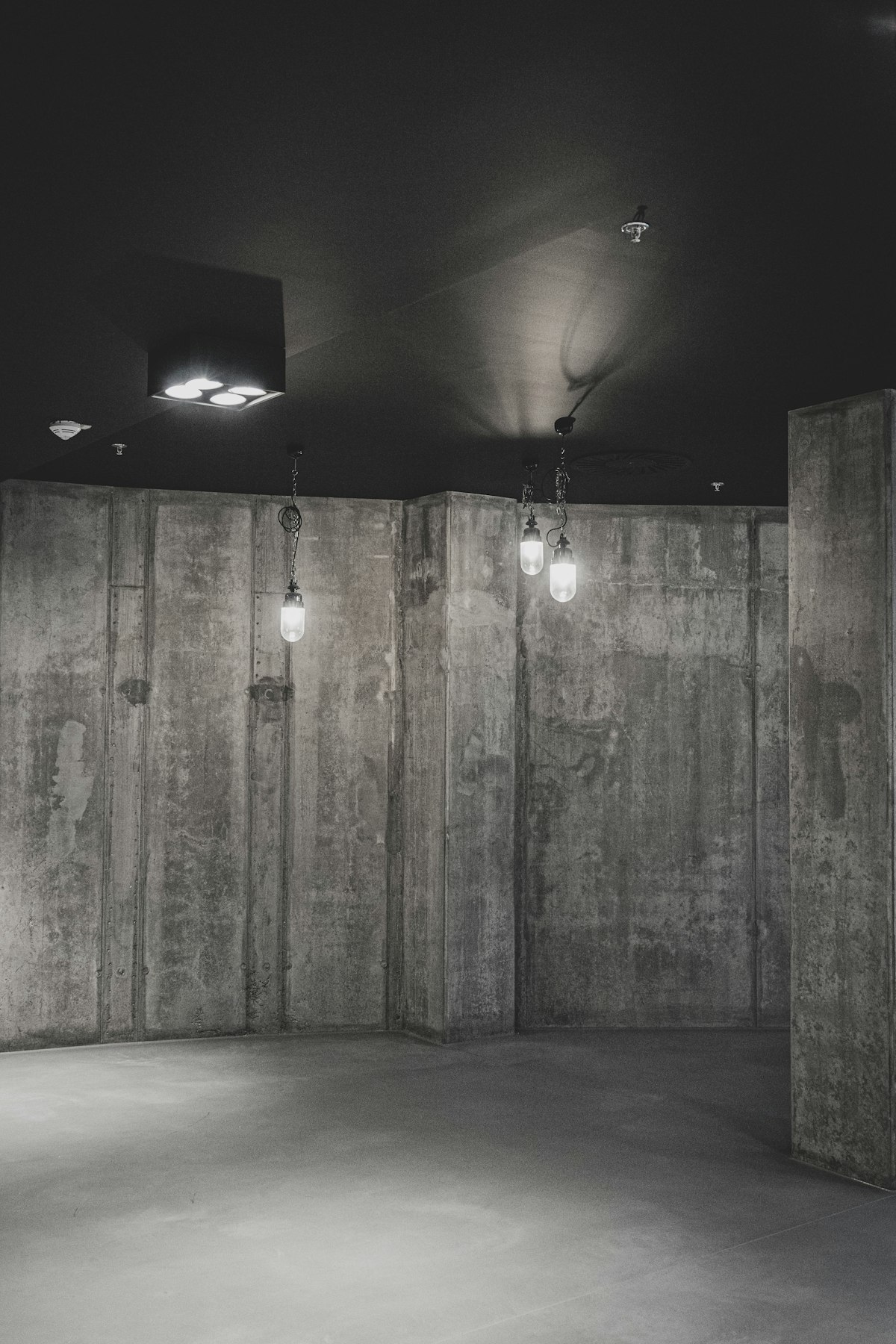
Make an exposed-concrete room feel warmer by balancing the surface with comfortable upholstery, compatible wood tones, practical textiles, and layered lighting. Identify the material and assess any damage before changing it. Start with the seating area and daily activities rather than adding decorative finishes everywhere.
Exposed concrete brings visual weight to a room. Depending on the light and what surrounds it, the same surface can feel calm, dramatic, or cold. The useful design question is not how to hide the concrete, but how to balance it with the activities and materials around it.
Identify the surface before changing it
An existing concrete wall, a thin decorative panel, and a concrete-look coating need different treatment. Find out what you have before drilling, painting, grinding, or sealing it. If the surface is structural or its condition is uncertain, seek qualified advice.
Cracks, recurring dampness, or other deterioration should be assessed on their own terms. Do not assume every mark is harmless character, and do not cover a problem simply to make the wall look more uniform.
Add warmth through contrast
Wood, upholstery, and a rug can create a softer relationship with a large concrete surface. You do not need to add all of them at once. Start with the area where you sit: a comfortable chair, a practical side table, and light that reaches the activity.
Compare warm and cool samples against the actual concrete. Its color may contain more variation than it appears to have in a photograph. A muted brown, cream, or olive can work, but the right choice depends on the floor, light, and existing furnishings.
Notice sound as well as appearance
A room with many hard surfaces may feel echoey. Textiles and upholstered pieces can help make the space more comfortable, though they are not a substitute for a professional acoustic solution when sound control is a major requirement.
Choose a rug for its location and care needs, and use curtains where they serve privacy or light control. Avoid adding fabric purely to satisfy a style formula if it creates a maintenance problem or obstructs a useful opening.
Use lighting to show the texture selectively
Light falling across a wall can reveal surface variation. Test the effect before committing to permanent fixtures, because it can also emphasize marks you would prefer not to highlight. Include separate light for reading, dining, or work so the concrete feature does not dictate the entire room’s lighting.
Let one strong surface be enough. A restrained selection of art and furniture gives it room to read without making the interior feel like a display set. The goal is a room where people want to stay, with concrete as one material in the composition rather than the reason every other choice becomes uncomfortable.
Identify which kind of warmth the room is missing
A room can look visually cold, feel physically uncomfortable, or sound overly reflective. Those are different problems. A warm-colored rug may change the appearance without resolving a building comfort issue. A new paint color will not correct recurring moisture. Describe the problem specifically before choosing a decorative solution.
Stand in the room during the times you use it most. Notice whether the concrete appears blue-gray, brown-gray, or varied in tone. Check the surrounding floor and ceiling as well. The concrete may be only one part of a larger group of hard surfaces. A change to furniture or window treatment can sometimes produce more balance than altering the wall itself.
For an illustrative loft living area, the first move might be to create a comfortable seating group with a rug, upholstered chairs, and a useful reading lamp. For a smaller bedroom, textiles and bedside lighting may do more than a large new piece of furniture. Choose the intervention around the room’s function.
Compare wood and textile samples beside the concrete
Bring samples into the room and look at them in daylight and after dark. A wood finish that looks golden in a showroom may appear overly orange beside a cool concrete wall. A textile described as ivory might look yellow or gray depending on its surroundings. Compare relationships rather than relying on the product’s color name.
Use one or two warmer notes repeatedly. That could mean a wood table and picture frame, or a textile color echoed in a cushion. Repetition helps the room feel coherent without requiring every item to match. Leave some simple surfaces so the concrete’s texture and the softer materials can each be understood.
Check the maintenance needs of the textiles you introduce. A thick rug may be appealing but unsuitable for a door swing or difficult to clean in a particular household. Curtains should serve privacy, light control, or another clear purpose. Comfort comes from practical fit as well as appearance.
Test lighting before committing to permanent fixtures
A portable lamp can help you understand how light changes the wall, provided it is used safely and according to its instructions. Compare light directed toward an activity with light that skims across the surface. The second may emphasize texture, including irregularities that were less noticeable under diffuse light.
Photograph the effect, but also sit in the room and check glare. A dramatic wall can look impressive while making the adjacent chair uncomfortable. Keep task lighting independent enough that reading or working does not depend on illuminating the feature wall. Several useful lighting positions often provide more flexibility than one dominant effect.
For permanent electrical changes, ask an electrician to review the proposed fixture locations and installation. Do not assume that mounting into or routing through an existing concrete surface is a routine decorative task. Building construction, permissions, and the actual material affect what is appropriate.
Frequently asked questions about concrete interiors
### Should I paint the concrete a warmer color? Possibly, but first identify the surface, its condition, and the requirements of any proposed coating. Try reversible changes with textiles, furniture, and lighting before committing. If the concrete is part of the building’s structure or has moisture issues, obtain appropriate professional advice.
Does every concrete room need a large rug?
No. A rug should suit the activity, furniture layout, floor conditions, and cleaning routine. It can provide visual and tactile contrast in a seating area, but it is not the only option. Upholstery and window treatments may serve the room better in some situations.
Can plants make concrete feel softer?
Plants can add contrast if the room provides appropriate light and you can maintain them. Choose them for the actual conditions rather than filling a dim corner for a photograph. If live plants are impractical, art or another personal object can provide variety without creating a care problem.
Keep the final arrangement focused
Choose one main concrete surface to remain visually prominent and let the furnishings support the room’s use. Avoid adding several equally strong industrial-looking elements merely to repeat the material. A comfortable chair, a well-placed table, and thoughtful light can give the space a more balanced character than another decorative concrete accessory. The finished room should invite people to stay, with the material contributing to the experience rather than controlling every decision.