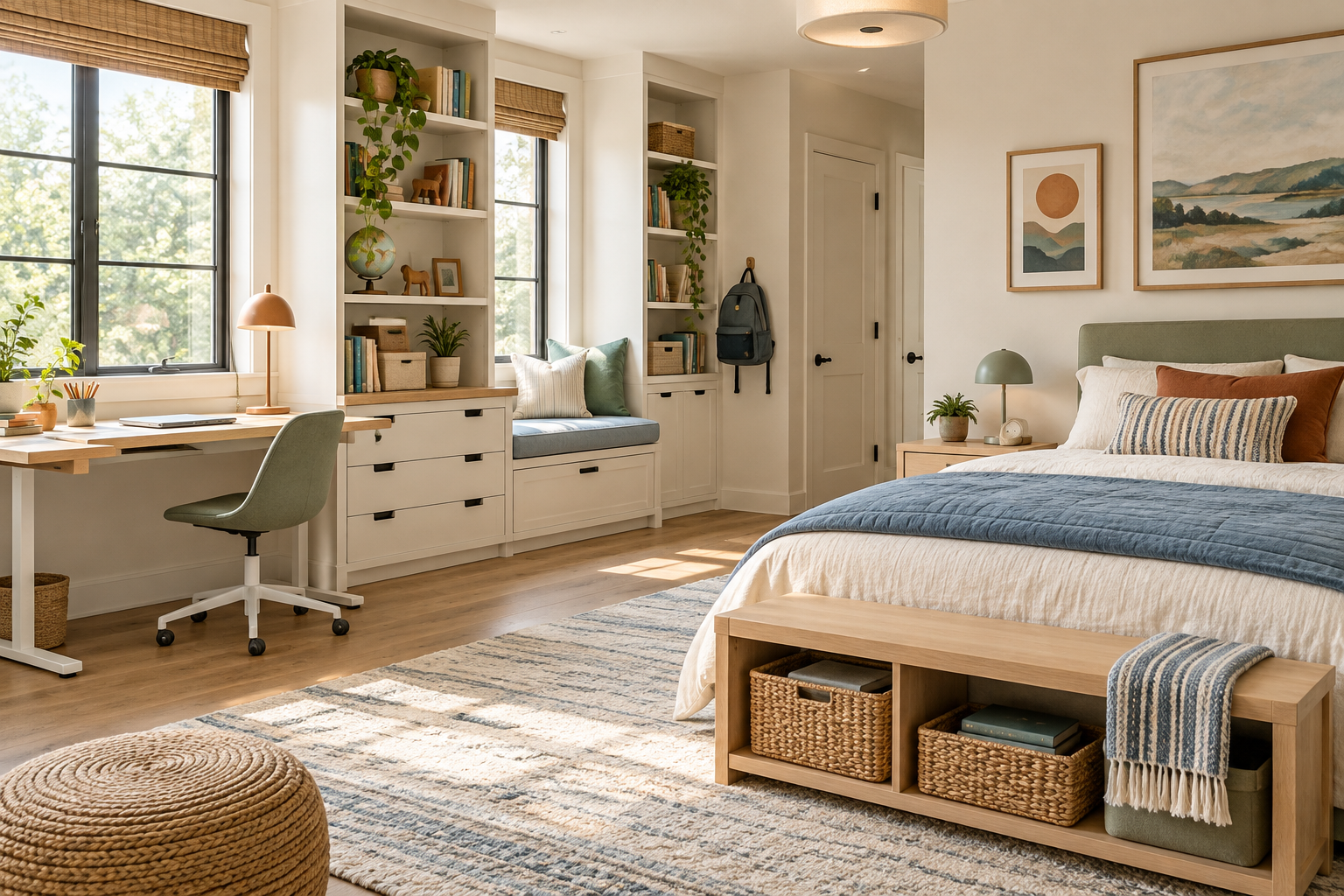
For a school-age child, a room that grows well uses adaptable furniture, accessible storage, clear activity zones, and changeable decorative layers. Follow product installation and anchoring instructions, use appropriate window coverings, and review the arrangement as abilities change. Infant sleep spaces need separate age-specific guidance.
A child’s room changes quickly: picture books become chapter books, craft supplies multiply, and yesterday’s favorite theme may lose its appeal. For a school-age child, a flexible room starts with dependable furniture and easy-to-change details. This guide concerns school-age rooms; infant sleep spaces require separate, age-specific guidance.
Give everyday activities a clear home
Identify the places for sleep, getting dressed, reading, and play or homework. They do not all need separate furniture. A clear floor area and a basket for a current project may work better than a dedicated activity table that is rarely used.
Ask your child what is frustrating now. A drawer that sticks or a hook placed too high can undermine an otherwise attractive storage plan. Keep frequently used belongings accessible without creating a reason to climb furniture.
Build safety into the furniture plan
Follow furniture instructions for installation and anchoring. The CPSC’s Anchor It campaign focuses on preventing furniture and television tip-overs. Do not treat a dresser’s weight or low appearance as a reason to skip the manufacturer’s safety directions.
Use cordless window coverings and keep beds, furniture, and toys away from window cords, in line with CPSC guidance. Review the whole room as abilities change; a layout that worked last year may present different temptations to an older or more adventurous child.
Make storage easy to reset
Use a few understandable categories rather than dozens of tiny compartments. Books, building toys, art supplies, and everyday clothes may each need a different container. Labels with words or pictures can help, but the system should remain simple enough to use on a busy evening.
Leave some capacity unfilled. If every shelf is packed on the day the room is organized, there is no room for the next school project. Rotate less-used items when practical and let your child help decide what stays.
Put personality in the changeable layers
Choose bedding, prints, and a small accent area for favorite colors or interests. Keep larger purchases adaptable enough to survive a change in taste. Test a study chair and work surface together, with attention to comfort, light, and room to move.
Finish by walking through the evening routine: put away toys, find pajamas, reach a book, and turn off the light. A room that supports those small tasks can feel both more independent and more settled.
Plan around routines before choosing a theme
Write down the sequence of an ordinary school day: getting dressed, finding a backpack, reading, working on a project, and preparing for bed. Identify the moments that currently cause frustration. A drawer that is difficult to open or supplies stored out of reach may matter more than the wall color.
Ask the child to describe what works and what does not. Keep the conversation concrete: where books go, where an unfinished project can stay, or which clothes are hard to find. This gives the room a practical brief without making every decision depend on a favorite character or temporary interest.
For an illustrative bedroom, a dependable bed and dresser could remain the main furniture while bedding, artwork, and storage labels change over time. The design can accommodate new interests without requiring a complete furniture replacement. Flexibility comes from useful proportions and a simple arrangement, not from buying every item marketed as convertible.
Make storage understandable at the child’s level
Use broad categories that match how belongings are used. Books, drawing supplies, building toys, and school items may each need a different type of storage. Avoid an elaborate sorting system that takes an adult to restore. A few clear homes for objects are easier to maintain than dozens of tiny compartments.
Leave space for growth. If all containers are full immediately after organizing, the system has no room for the next school project or changing clothing sizes. Review the contents periodically with the child, and move items that no longer belong in everyday storage to an appropriate place.
Check the physical arrangement as carefully as the categories. Storage should not encourage climbing or interfere with windows and routes. Follow furniture installation and anchoring instructions. Use the CPSC resources linked in this article to inform the room review rather than assuming that a product’s appearance establishes safety.
Choose a study area that can change
The work surface and chair should suit the child’s current use, with room for the materials involved. A space for drawing may need a different arrangement from a laptop setup. Check lighting, access to supplies, and whether the chair can move without hitting another piece of furniture.
If an adjustable product is being considered, examine how it adjusts and what its instructions require. A promise that furniture grows with a child should be evaluated against the actual range and practical operation. Adaptability is useful only if the household can make the changes correctly and conveniently.
Keep the work area from becoming the default storage surface for everything else. A nearby place for unfinished work can help preserve a usable desk. The goal is a repeatable routine: sit down, find the needed materials, and return them to a manageable location afterward.
Frequently asked questions about flexible kids’ rooms
### Should I buy a themed furniture set? Consider putting the theme in bedding, prints, or another changeable layer first. Larger furniture can remain useful through several changes in taste. If a themed piece is genuinely practical and well suited to the room, evaluate it on those qualities rather than the theme alone.
How often should I review the layout?
Review it when routines, abilities, or belongings change, and whenever a recurring problem appears. School transitions, new hobbies, or a different storage need can make an earlier arrangement inconvenient. Safety and accessibility deserve attention alongside appearance.
Can a small bedroom include play and homework space?
Often the same clear area can serve different activities at different times. Start with the actual routine and avoid adding a separate piece of furniture for every task. Keep everyday movement and storage usable before filling the remaining floor space.
Test the evening reset together
Walk through putting away the day’s items, finding pajamas, reaching a book, and preparing the room for sleep. Notice which tasks still require awkward reaching or moving furniture. Adjust those first. A room that grows with a child supports increasing independence through clear routines and dependable furniture, while leaving personality in the layers that are easy to change.